

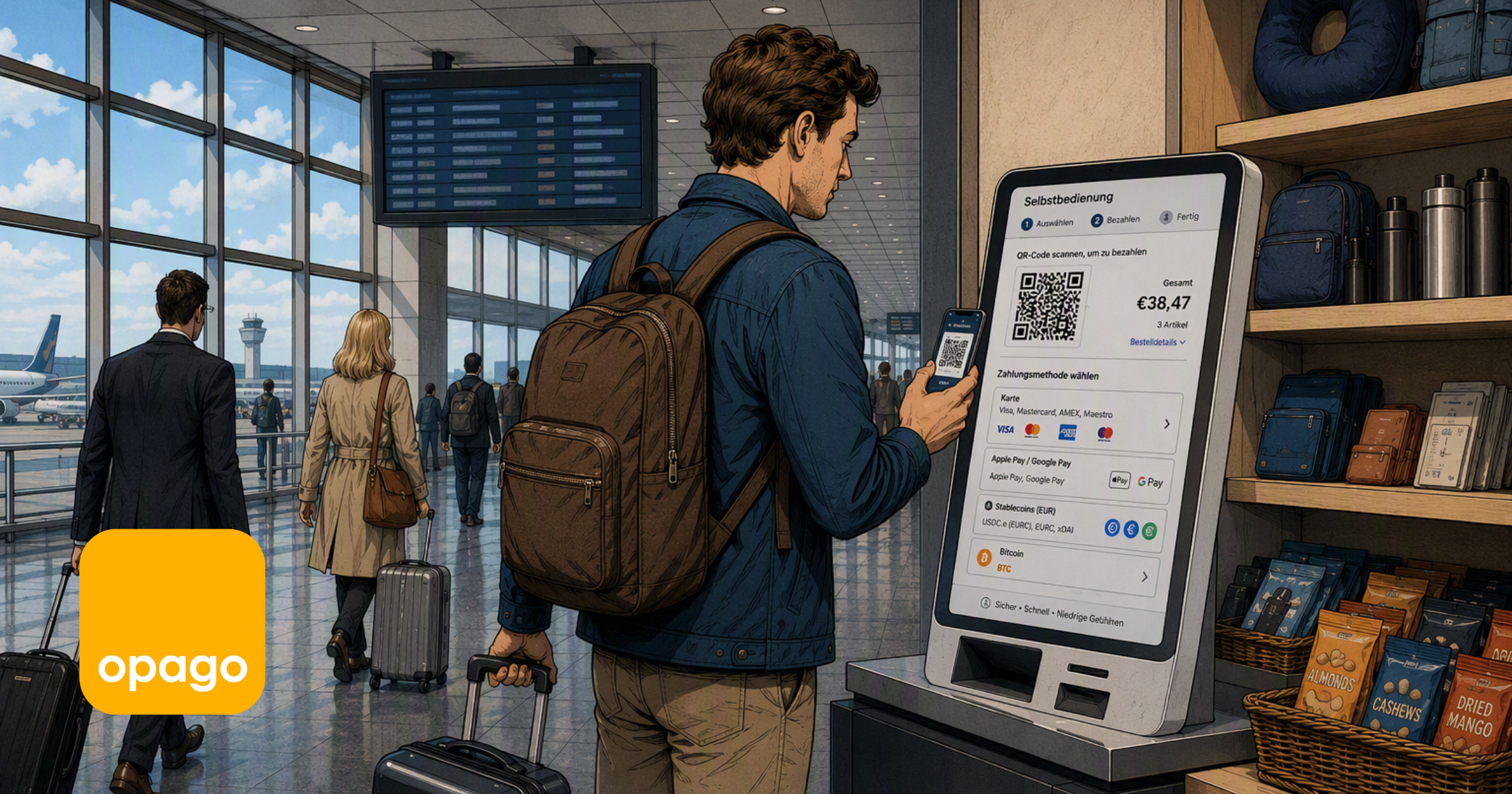
From a Niche Topic to an Everyday Tool
Stablecoins, digital currencies pegged to an asset such as the euro or the dollar, were long considered primarily a part of the crypto world: trading, DeFi. That is now changing noticeably. More and more consumers own digital assets, a uniform legal framework is in place, and payments using them are becoming increasingly suitable for everyday use. For financial institutions and retailers, stablecoins are thus shifting from a topic to watch to a strategic issue.
The Numbers Behind the Trend
According to the ECB’s SPACE study (Study on the Payment Attitudes of Consumers in the euro area, December 2024), 9% of adults in the euro area own digital assets, which corresponds to over 27 million people. In 2022, that figure was still at 4%, meaning ownership has more than doubled in two years. A separate, monthly ECB survey (Consumer Expectations Survey, as of November 2024) arrives at a similar figure of 9.7%, though due to methodological differences, it shows a slight downward trend rather than an upward one compared to 2022—an indication that estimates vary depending on the survey method. Regardless of the specific survey, this is a growing target group with its own spending behavior that brings purchasing power outside the realm of traditional card payments. Furthermore, with MiCA, a uniform legal framework for digital assets in the EU has been in effect since the end of 2024. For financial institutions, this means that stablecoin and crypto payments can now be offered in full compliance with regulations, without gray areas or uncertainty from country to country.
Stablecoins Reach the Mass Market
The fact that stablecoins are finding their way into the mass market is also evident from who is now offering them. In July 2026, Samsung announced that it would integrate stablecoins directly into Samsung Wallet, while Telegram is building its crypto wallet into all mini-apps by default and has supported USDT payments since 2024. There’s also a recent example from Europe: Revolut, Europe’s most valuable fintech company, was selected in June 2026 by the UK’s Financial Conduct Authority (FCA) for a stablecoin sandbox to test a stablecoin pegged to the pound. Together, these platforms reach well over one billion users. These are two of many examples showing that stablecoins are no longer limited to specialized crypto apps but are making their way into the places where people already use their smartphones. At the same time, QR code-based payments at the point of sale are becoming increasingly commonplace. According to Juniper Research, the global value of QR code payments reached $5.4 trillion in 2025, and growth of 50% to over $8 trillion is expected by 2029. It is precisely this infrastructure that stablecoin payments in retail are already utilizing today.
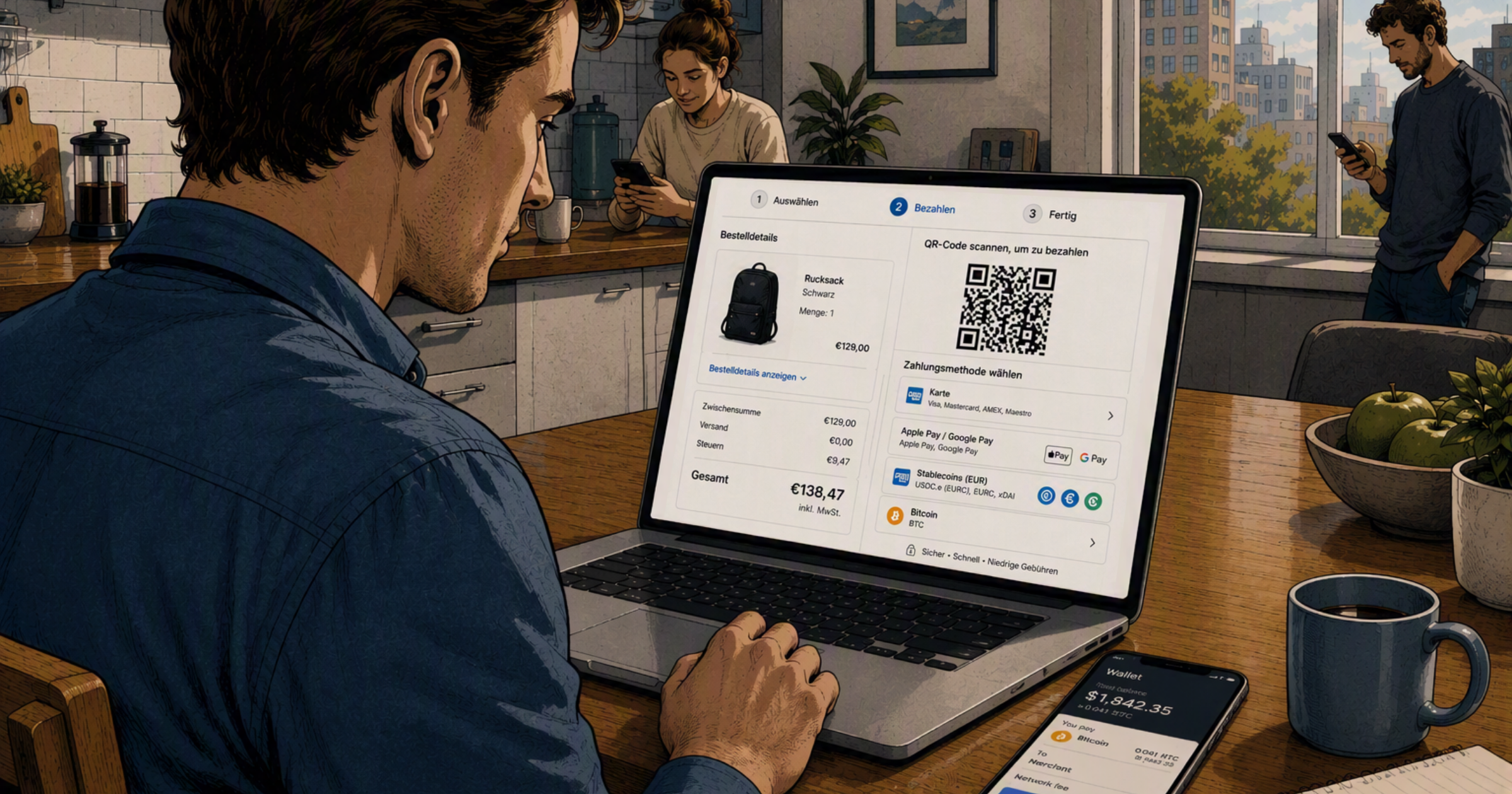
The digital euro does not close a gap
The digital euro is coming and is a useful addition to the European payments system. What it does not solve, however, is the international dimension. It is primarily designed for citizens and businesses in the eurozone. According to current EU plans, travelers and individuals not residing in the eurozone may, at least, gain temporary access through a payment service provider. For international trade and tourists without a European bank account, this remains a structural limitation. Stablecoins and Bitcoin do not have this problem; they function across borders, independent of a European bank account. Anyone who wants to reach international customers cannot ignore the topic of stablecoins. The digital euro and stablecoins are not mutually exclusive; they complement each other.
What This Means for Financial Institutions
Growing holdings of digital assets, a clear legal framework provided by MiCA, and new distribution channels via major platforms: Stablecoins are moving beyond their niche status. This doesn’t mean you have to make a complete overhaul overnight, but rather that you should plan for this now, before you have to retrofit your systems later. 0% chargebacks, competitive fees, and flexible euro settlement are the foundation that makes such an offering worthwhile. This is exactly where opago comes in. We support financial institutions and companies in offering MiCA-compliant stablecoin and Bitcoin payments at the point of sale, online, or to reach international customers.
About opago
opago is a German digital asset infrastructure company that bridges the traditional financial world and the digital economy. We offer a digital asset payment platform with integrated compliance for financial institutions and businesses across Europe, designed for speed, security, and full regulatory compliance. With over 27 million consumers in the eurozone, a clear legal framework, and new purchasing power outside of traditional payment systems, digital assets have evolved from a crypto trend to a retail payment option.
Would you like to find out how this can be implemented for your business? Contact us.